Six Legged Society
Ensuring a future for New Hampshire's pollinators & natural world
Remember when a Sunday drive resulted in a windshield covered with bugs?
Today: no bugs.
This alarming trend even has a name, "The Windshield Effect," and New Hampshire is seeing troubling results. One cause is pesticides: spraying, in fertilizers, on plants.
There are safer alternatives.
Read on to learn more...
About Us
Founded by Tonya Albee, a retired successful business owner and avid pollinator gardener, the society is a group of New Hampshire residents collaborating to save our biodiversity with a focus on pollinators.
Joining Albee is Bob Eaton, a retiree with advanced degrees in engineering from Stanford University with a passion for the natural world and Sue Callihan, a notable professional painter and respected pollinator gardener from Hancock.
We dedicate ourselves to the preservation and support of vital pollinators in New Hampshire. Pollinators, such as bees, butterflies, and beneficial insects are crucial to our ecosystem, aiding in the growth of plants and the production of food. Through public education, statewide bipartisan legislation, and the assistance of national organizations including Xerces, the American Bird Conservancy, and the Audubon Society, we aim to create an environment where pollinators can thrive and the ecosystem is robust.
2025 Bipartisan NH Legislation
Two house bills pending assigned numbers have been submitted by State Rep. John MacDonald.
The bipartisan legislation is aimed at protecting New Hampshire's pollinators, biodiversity, and lakes.
These two bills include restrictions on neonicotinoid treated corn & soy seeds as well as restrictions if applied to turf, and reclassify neonicotinoids to "restricted use" so they will only be available to licensed professionals.
Help Us! Sign the Petition.What YOU Can Do
6 Easy tips YOU can do. Save money, time & pollinators.
Pesticides kill bees, butterflies, and other beneficial insects, even when used in small amounts.
Leaves become critical winter habitats for butterflies, moths, beetles, and other pollinators. They also provide essential habitat for larvae of spring insects. Check out this great resource from the National Wildlife Federation.
Artificial light drowns out fireflies' signals and disrupts nocturnal pollination. Turning off lights helps plants reproduce and insects survive.
Native plants are best suited to local pollinators. Choose varieties that bloom across seasons to provide year-round support. Check which plants are native to your NH zipcode here.
Consider planting keystone native species - view this chart from the National Wildlife Federation for Northern Forests keystone plants.
If nothing else, plant an oak tree. Oaks support more life-forms than any other North American tree genus. Learn more from this National Park Service resource.
Add water to a shallow dish with pebbles, marbles, or cork to give creatures a safe place to land and drink.
Educate your friends and neighbors and join your local conservation group. Support the bipartisan legislation.
GALLERY
Testimonials
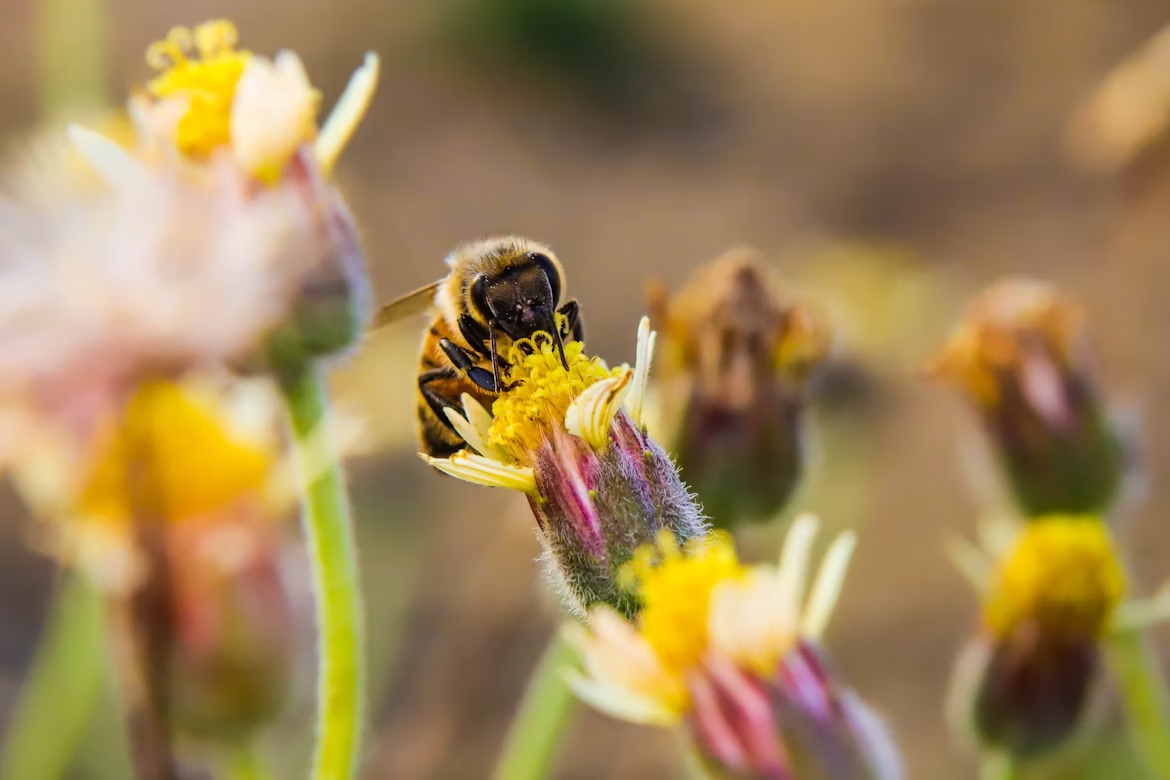
I never realized how important pollinators were until I learned about their decline. This organization opened my eyes to the crisis we're facing.
The educational programs are fantastic. My kids now understand why we need to protect bees and butterflies.

I stopped using my leaf blower and went back to raking. Better for the bugs and I think I'm getting fitter.
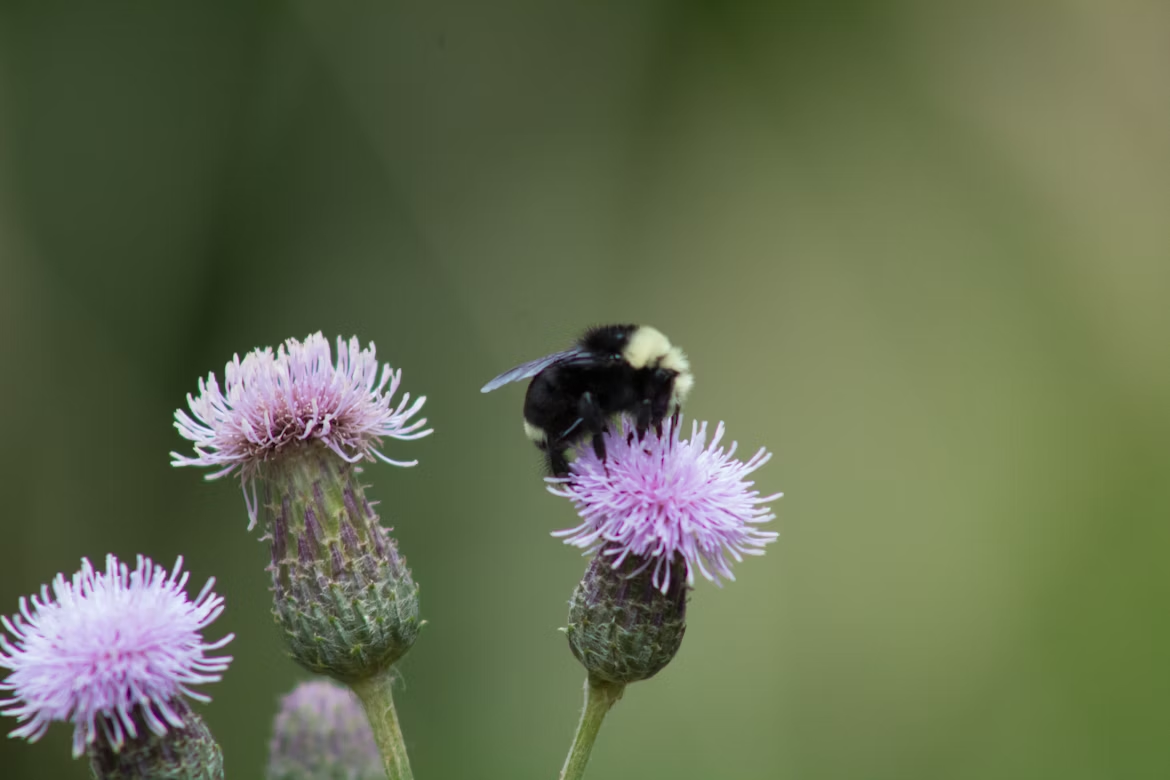
My students are fascinated now. We used to have maybe one bee visit our school garden. Now there's a whole ecosystem out there.
Join the Cause
Together, we can make a difference for pollinators.
Research & Resources
Contact
PO Box 6
Wolfeboro Falls, NH 03896
info@sixleggedsociety.com
(603) 924-0440
Press


FAQ
Enthusiastic YES. Send us an email-- info@sixleggedsociety.com.
Email us at info@sixleggedsociety.com or give us a call at (603) 924-0440
Info@sixleggedsociety.com
No - take a look at what the Xerces Society for Invertebrate Conservation has to say about it. We echo their words--leave the leaves. https://xerces.org/leave-the-leaves